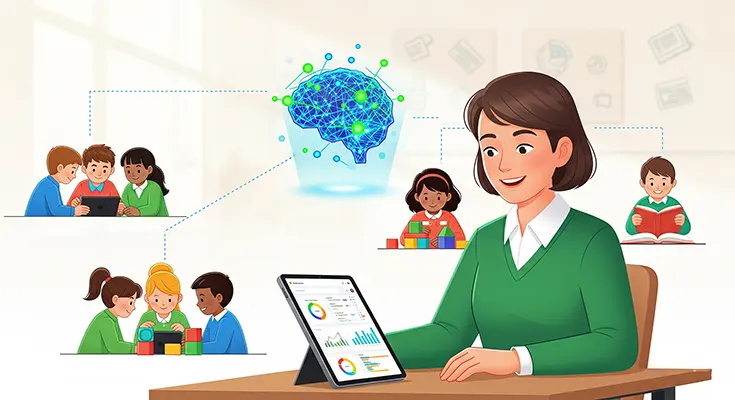


Paving the Way: Transition Planning and Support for Special Education Students to Adulthood in Surabaya

Paving the Way: Transition Planning and Support for Special Education Students to Adulthood in Surabaya

The journey from adolescence to adulthood is a significant milestone for all young people, but for special education students, this transition often requires thoughtful planning and robust support. In Surabaya, East Java, Indonesia, dedicated efforts are underway to ensure these students are equipped with the skills and resources necessary to navigate the complexities of independent living, employment, and community engagement.

Transition planning is not a one-time event; it’s a comprehensive, individualized process that ideally begins years before a student graduates. For special education students in Surabaya, this process typically starts around middle school, evolving as the student’s needs and aspirations become clearer. The core of this planning lies in developing an Individualized Transition Plan (ITP), which is an integral part of their Individualized Education Program (IEP).

Key Pillars of Transition Planning in Surabaya:

  1. Early and Continuous Assessment: Understanding each student’s unique strengths, interests, preferences, and support needs is paramount. This
Paving the Way: Transition Planning and Support for Special Education Students to Adulthood in Surabaya Read More
Free AI and Machine Learning Tutorials for Kids Using Scratch

Free AI and Machine Learning Tutorials for Kids Using Scratch

Introducing children to artificial intelligence (AI) and machine learning (ML) can spark their curiosity and lay the foundation for future tech skills. One of the best ways to make AI and ML concepts accessible to kids is through Scratch, a visual programming language that allows young learners to create interactive stories, games, and animations with simple block-based coding. Fortunately, there are many free AI and machine learning tutorials for kids using Scratch that provide an engaging and hands-on introduction to these advanced topics.

Why Use Scratch for AI and Machine Learning Learning?

Scratch is designed specifically for children, typically ages 8-16, to learn programming logic and problem-solving without needing to write complex code. Its drag-and-drop interface makes abstract concepts concrete and fun.

When learning AI and machine learning through Scratch, kids can:

  • Explore basic AI ideas such as pattern recognition and decision-making.
  • Build simple machine learning models through interactive projects.
Free AI and Machine Learning Tutorials for Kids Using Scratch Read More
How to Create an Individualized Education Program (IEP) for Special Needs Students

How to Create an Individualized Education Program (IEP) for Special Needs Students

Creating an Individualized Education Program (IEP) is a pivotal process in supporting special needs students to achieve their fullest potential in the educational environment. An IEP is a legally binding document tailored to each student’s unique learning requirements, outlining specific goals, accommodations, and services designed to provide effective and equitable education. Understanding how to create an Individualized Education Program ensures that educators, parents, and specialists collaborate efficiently to meet the student’s diverse needs.

What is an IEP?

An IEP is a customized educational plan developed for students who qualify for special education services under the Individuals with Disabilities Education Act (IDEA). It describes the student’s current performance, sets measurable goals, details accommodations, modifications, and outlines related services needed to support learning.

Steps on How to Create an Individualized Education Program (IEP)

1. Referral and Evaluation

The IEP process begins with a referral, either from a teacher, parent, or specialist, expressing …

How to Create an Individualized Education Program (IEP) for Special Needs Students Read More
AI Online Courses for Kids with Certification for Middle School Students

AI Online Courses for Kids with Certification for Middle School Students

As artificial intelligence (AI) continues to shape the future, introducing middle school students to this exciting field at an early age is becoming increasingly important. AI online courses for kids with certification offer a fantastic opportunity for middle school students to learn foundational AI concepts, develop essential skills, and gain recognition for their achievements. These courses combine engaging content with practical projects, making AI accessible and fun for young learners.

Why AI Online Courses for Middle School Students?

AI is no longer just a topic for college students or professionals; it’s becoming a critical skill for the next generation. Middle school is the perfect time for students to explore AI, as they can develop computational thinking, problem-solving skills, and creativity that are essential in today’s digital world. Certified AI courses bolster their academic profile and encourage continued learning in STEM (Science, Technology, Engineering, and Mathematics) subjects.

Key Features of AI

AI Online Courses for Kids with Certification for Middle School Students Read More
How Many Years of Preschool is Really Needed by a Child?

How Many Years of Preschool is Really Needed by a Child?

Preschool is a crucial part of a child’s development. It prepares them for kindergarten and life beyond. Most parents are in agreement that preschool is important, but the question of how many years a child needs to attend preschool often arises. Answers vary depending on a number of factors including age, stage of development, and the individual needs. Parents can make informed decisions if they understand the benefits of preschool.

Understanding the purpose of Preschool

Preschool is a bridge that connects home to kindergarten. It offers children a place where they can learn essential skills, in a playful and structured environment. These programs usually focus on:

  1. Social and emotional development: Learn to share, cooperate and express emotions in a proper manner.
  2. Cognitive growth: Develop early literacy and numeracy skills, as well as problem solving abilities.
  3. Motor Skills: Improvement of fine and gross motor skills through structured play.
  4. Language Development: Improve
How Many Years of Preschool is Really Needed by a Child? Read More