We have all been there: the rain has been pouring for hours, the walls feel like they are closing in, and your preschooler has an abundance of pent-up energy that needs an outlet—fast. While the temptation to hand over a tablet is strong, those high-energy “cabin fever” moments are actually golden opportunities to support your child’s physical and emotional development.
Gross motor skills—movements involving the large muscles in the arms, legs, and torso—are the foundation of physical literacy. On rainy days, you can transform your living room into a movement laboratory that burns off energy while building essential skills like balance, coordination, and proprioceptive awareness.
Why “Heavy Work” Calms the Chaos
When a child is bouncing off the walls, it is often a sign that their nervous system is craving proprioceptive input. Proprioception, often called our “sixth sense,” provides the brain with information about where our body is in space and how much force we are using.
“Heavy work” activities—movements that involve pushing, pulling, lifting, or resisting gravity—are incredibly grounding. They help regulate a child’s nervous system, turning that frantic, chaotic energy into focused, calm, and manageable behavior.
The Indoor Playbook: 10 Games to Burn Energy
I. The Animal Movement Series
Animal walks are the gold standard for full-body conditioning because they require core stability and shoulder strength.
- The Bear Crawl: Crawl on hands and feet (not knees) while keeping the hips high.
- The Crab Walk: Sit on the floor, lift your hips, and walk backward using hands and feet.
- The Frog Jump: Deep squats followed by explosive upward jumps.
- Why it works: These activities build core strength and shoulder stability, which are vital for later skills like sitting upright in a school chair or holding a pencil.
II. The Living Room Obstacle Course
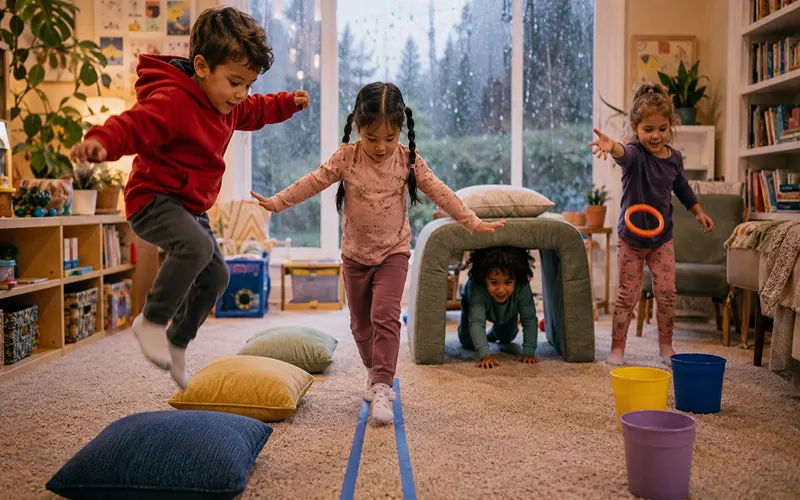
Use what you have: sofa cushions as “mountains,” painter’s tape on the floor as a “balance beam,” and dining chairs to crawl under.
- Setup: Create a loop that requires jumping (over a pillow), crawling (under a table), and balancing (on a line of tape).
- Why it works: This requires motor planning, teaching the child to navigate their environment safely and execute a sequence of movements.
III. Stationary Challenges
When space is limited, these games provide intense movement without requiring a track to run on.
- Balloon Keep-Up: The goal is to keep a balloon off the floor using only hands or feet.
- Freeze Dance: Play high-energy music and have the child dance wildly, then freeze instantly when the music stops.
- Why it works: Balloon play improves visual-tracking and hand-eye coordination, while freeze dance builds impulse control and “stop-start” muscle coordination.
IV. “Quiet” Heavy Work
These are perfect for when you need to wind things down but still need to expend energy.
- Wall Push-Ups: Have your child place their palms on a wall and push their body away repeatedly.
- Pillow Jumping: Place thick pillows in a row and have your child jump from one to the other—heavy, controlled impact.
- Animal Yoga: Slow, controlled poses like “Down Dog” or “Cat-Cow” stretch the muscles and promote calm.
- Why it works: These provide the deep pressure needed to soothe an overstimulated child, promoting better emotional regulation and sleep.
Safety and Space Management
You don’t need a gymnasium to keep things safe. A few simple rules turn any living room into a safe zone:
- Clear the Perimeter: Push hard furniture to the edges and use rug pads or gym mats under slippery areas.
- Define the Zone: Use painter’s tape to create a “safe zone” on the floor. If they jump outside the tape, the game is paused.
- Soft Landings: Use couch cushions or sleeping bags as landing pads for jumping games to protect ankles and elbows.
Turning Gloom into Growth
Rainy days do not have to be a battle of wills. By embracing these gross motor activities, you shift the dynamic from “containment” to “connection.” These games are not just ways to pass the time; they are vital developmental exercises that help your child learn how to control their body, regulate their emotions, and gain confidence in their own physical abilities.
The next time the rain starts, don’t view it as a day trapped indoors. View it as a chance to host your very own mini-Olympics. Whether you’re bear-crawling through the hallway or having a balloon-batting tournament in the kitchen, you are building the foundation for a healthy, active, and happy child—one jump at a time.