

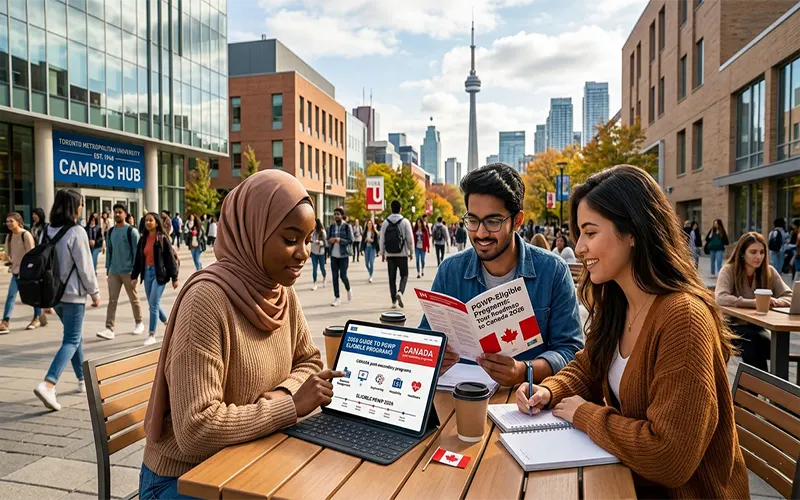
For international students, the Post-Graduation Work Permit (PGWP) has long been the primary bridge between Canadian education and permanent residency. However, as of 2026, the era of “automatic” work permits is over. Canada has implemented a stricter, more strategic framework that ties your ability to work after graduation directly to Canada’s current labor market needs.
If you are currently studying or planning to enroll, simply graduating from a Designated Learning Institution (DLI) is no longer a guarantee of eligibility. You must now navigate a system defined by field-of-study restrictions, language thresholds, and specific program requirements.
The Two-Tier Eligibility System
The Canadian government now differentiates between university degree programs and non-degree programs when determining PGWP eligibility.
1. Degree Programs (Bachelor’s, Master’s, PhD)
If you are pursuing a university degree, you remain in the most favorable position. These programs are exempt from field-of-study restrictions. Whether you study Humanities, Business, or STEM, you remain eligible for a PGWP, provided you meet the other standard criteria (such as program length and full-time status).
2. Non-Degree Programs (College Diplomas, Certificates)
If you are enrolled in a college program (diploma, certificate, or post-graduate certificate), your field of study is critical. You must graduate from a program linked to an eligible Classification of Instructional Programs (CIP) code. These codes are tied to occupations currently facing long-term labor shortages in Canada. If your program’s CIP code is not on the government’s current list, your PGWP application will likely be refused, regardless of your grades or the prestige of your institution.
Core Requirements Checklist
Regardless of your program type, you must satisfy these fundamental requirements to receive a PGWP:
- DLI Status: You must graduate from a Designated Learning Institution authorized to grant credentials that lead to a PGWP.
- Language Proficiency: You must submit official results from an IRCC-approved language test (e.g., IELTS General Training, CELPIP General, or PTE Core) taken within two years of your application:
- University Degree Graduates: Minimum CLB 7 in all four language areas.
- College/Non-Degree Graduates: Minimum CLB 5 in all four language areas.
- Full-Time Status: You must have maintained full-time enrollment throughout your program. Part-time studies are generally only permitted during your final academic semester.
- Application Window: You have exactly 180 days from the date you receive your final transcripts or a formal letter of completion to submit your application.
Strategic Program Selection
With the 2026 CIP code list “frozen,” there is little room for error. When selecting a program, prioritize the following sectors, which are currently being targeted for labor-market integration:
- Healthcare and Social Services
- Science, Technology, Engineering, and Math (STEM)
- Skilled Trades (Construction, Electrical, Plumbing, etc.)
- Agriculture and Agri-Food
- Transport and Logistics
What to Check Before You Enroll:
- Verify the DLI: Confirm the school is on the official list of institutions offering PGWP-eligible programs.
- Locate the CIP Code: Ask your school’s registrar for the specific 6-digit CIP code of your program.
- Cross-Reference: Compare that code against the official IRCC list of eligible CIP codes.
- Confirm Credentials: Ensure the institution is public or a specific type of private institution authorized to grant degrees. Note: Many private career colleges remain ineligible for PGWP, even if they have “College” in their name.
Critical Warnings
- Test Types Matter: Always take the General Training version of your language test (IELTS/CELPIP). Academic versions—often used for university admissions—are not accepted for PGWP applications and are a common cause of instant refusals.
- The 50% Rule: You must complete at least 50% of your program in-class within Canada. Excessive online study from abroad can render your program ineligible or reduce the length of your work permit.
- Implied Status: Always submit your PGWP application while your study permit is still valid. Doing so allows you to work full-time while your application is processed, a vital benefit for graduates entering the job market.
The 2026 immigration landscape rewards those who plan ahead. If your goal is a path to permanent residency, align your educational choices with the sectors Canada is actively seeking to fill. Before you commit time and tuition, verify your program’s CIP code, prepare for your language testing early, and ensure your enrollment status stays strictly full-time throughout your journey.