
Is the Sonoran Desert Institute worth it? For students learning technical skills online, the answer often lies in how well feedback is built into the educational process. The Sonoran Desert Institute (SDI), accredited by the Distance Education Accrediting Commission (DEAC), has developed a structured feedback system that replicates the hands-on guidance students typically receive in an in-person training environment. Weekly tasks, detailed instructor comments, and iterative improvement provide students with the support they need to reach professional standards from the comfort of their own homes.
In traditional trade environments, instructors stand beside students, correcting techniques in real time. Remote programs must recreate this level of mentorship through digital means. It achieves this by breaking each course into predictable weekly cycles, using mailed projects, digital submissions and time-stamped instructor feedback. The result is a consistent rhythm that drives skill development in a step-by-step manner.
Weekly Structure Builds Consistency
Each week follows a clear pattern designed to keep students engaged and on track. On Monday, new modules containing reading assignments, video demonstrations and instructions for that week’s project will be unlocked. Midweek practice quizzes reinforce key concepts, while discussion boards provide students with an opportunity to ask questions and seek troubleshooting assistance. By Friday, students submit either narrated videos or photo sets documenting their work.
This structure creates a dependable workflow. Students know what’s expected each week, allowing them to plan jobs, families, and other commitments. Over time, this steady pace helps learners internalize both the theory and the physical techniques required in their trade. For example, a firearms technology student might be assigned to disassemble and measure specific components of a firearm. A drone technology student may plan a simulated flight path or complete a digital mission exercise. Each task is deliberately scoped to reinforce that week’s lessons while preparing for the next.
Instructor Comments: Replicate On-Site Mentorship
Once students submit their work, instructors provide detailed feedback. Instead of quick checkmarks or vague notes, it uses time-stamped commentary embedded directly into videos or photos. Instructors point out exact moments where a tool angle slips, a measurement needs adjustment, or a procedure could be refined.
This level of specificity mirrors the guidance students would receive in a physical classroom, where an instructor might stop a student mid-task to correct them. The digital format has an added advantage. Students can revisit feedback multiple times. If an instructor comments on a torque application in a video at the two-minute mark, the student can replay that section until the concept clicks. Many learners cite this precision as a key reason they find the Sonoran Desert Institute worth it. The feedback isn’t generic. It’s actionable, detailed and targeted toward mastery.
Iteration Turns Feedback into Skill
The real value of feedback loops emerges in the following weeks. Students don’t just receive comments and move on. They apply those notes to their subsequent assignments. Because the curriculum builds incrementally, earlier feedback informs future tasks. A student who corrected their measurement technique in Week 2 applies that skill in more advanced machining exercises in Week 4. A drone student who refines navigation inputs in one simulator session carries those improvements into the next mission plan.
This iterative approach mirrors how professionals refine their craft over time. Mistakes become learning moments, rather than setbacks. With each cycle, students move closer to industry-level precision. This structure is one reason many consider the Sonoran Desert Institute worth it. It provides the kind of ongoing mentorship that keeps progress steady and measurable.
Combining Digital Tools and Physical Practice
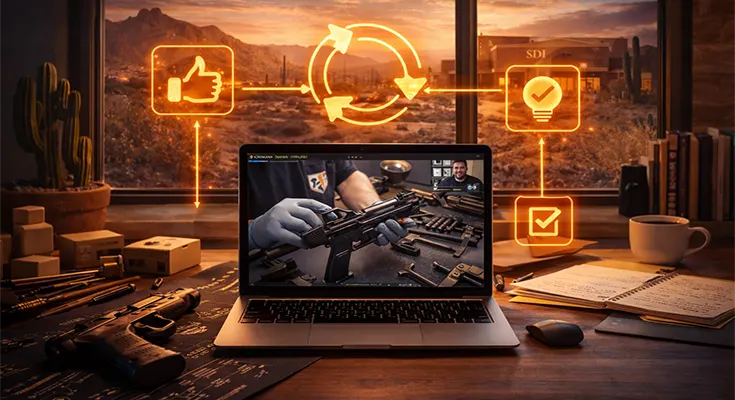
Feedback loops function most effectively when digital tools and hands-on activities work in tandem. It uses mailed lab kits to provide students with tangible materials to work with, while digital submissions enable instructors to observe those physical tasks remotely. Students measure components, perform assemblies, plan missions or practice navigation, then capture their work through videos or images.
Instructors review these submissions using the same level of scrutiny they would apply in person. They can zoom in on images, slow down videos, and provide particular notes. This blend of physical and digital interaction creates a feedback system that’s both rigorous and flexible. For working adults, this model also fits easily into their schedules. They can complete assignments at home, receive feedback asynchronously, and improve at their own pace, within the course schedule. This flexibility, paired with high standards, is another reason many consider Sonoran Desert Institute worth it.
Student Experiences Reflect Real Growth
Student stories highlight how this feedback loop supports real skill development. One firearms technology student described their first few submissions as rough. Their instructor left time-stamped notes on tool handling, measurement technique and documentation. By applying those notes each week, the student saw measurable improvement, eventually earning top marks on advanced machining projects.
A drone technology student shared a similar experience with navigation simulations. Early submissions revealed inconsistent inputs, which instructors flagged with specific feedback. After revisiting the simulator exercises and applying the guidance, their mission planning and flight performance improved significantly. These experiences show how structured feedback drives progress. Instead of isolated assignments, each week connects to the next, forming a continuous learning arc that mirrors real apprenticeship models.
Building Professional Habits Through Iteration
Beyond technical skills, feedback loops cultivate habits that professionals rely on to succeed, including attention to detail, accurate documentation, and a willingness to refine their work based on critique. Students learn to see feedback not as criticism, but as part of their training. This mindset prepares them for industries where quality assurance and continuous improvement are part of daily operations.
The process also builds confidence. Students know that mistakes will be met with constructive guidance, not penalties. It encourages them to take on challenging tasks, revisit techniques and keep improving. Many students cite this growth environment as a key reason they consider Sonoran Desert Institute worth it, because it mirrors the mentorship found in professional settings.
A System Built for Mastery
Feedback is often the missing ingredient in online technical education. Without it, students can feel isolated, unsure whether they’re on the right track. It addresses this by structuring feedback into every part of the learning process. Weekly assignments, detailed instructor comments, and iterative improvement form a continuous loop, that turns remote education into a mentorship-driven experience.
Skill mastery outside a physical classroom becomes possible through feedback. By blending consistency, actionable guidance and iterative practice, the program enables students to achieve professional standards from the comfort of their own homes. Many conclude that Sonoran Desert Institute is worth it because feedback isn’t an add-on. It’s the backbone of their learning journey.