


Fast-Track Online Bachelor Degree Completion Programs in the USA

Fast-Track Online Bachelor Degree Completion Programs in the USA

In the professional landscape of 2026, millions of Americans find themselves in the “some college, no degree” category. Whether you stepped away for work, family, or financial reasons, the good news is that the higher education system has evolved to meet you exactly where you are. Degree completion programs are no longer just “catch-up” courses; they are highly efficient, strategic pathways designed to get you across the finish line as quickly as possible.

If you have already earned college credits, you are sitting on a valuable asset. The goal now is to maximize that asset by choosing an institution that prioritizes Prior Learning Assessment and accelerated delivery models.

How “Fast-Track” Actually Works

Not all online programs are designed for speed. To graduate quickly, you must look for institutions that utilize specific mechanisms to bypass redundant coursework:

  • Competency-Based Education (CBE): In a traditional model, you pay for time (16-week semesters).
Fast-Track Online Bachelor Degree Completion Programs in the USA Read More
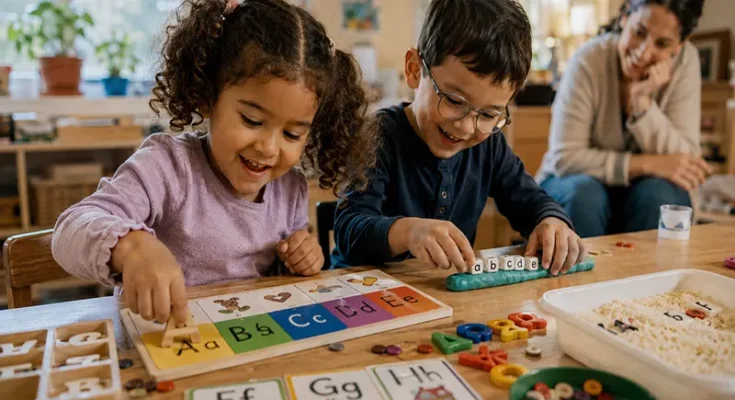
Hands-On Alphabet Matching Preschool Activities for Beginners

Hands-On Alphabet Matching Preschool Activities for Beginners

For many parents, the pressure to “prepare” a child for school often translates into a stack of boring worksheets and rote flashcard drills. However, if you talk to any early childhood development expert, they will tell you the same thing: preschoolers do not learn through passive observation; they learn through their hands, their senses, and their whole bodies.

Alphabet matching is a fundamental developmental milestone. It is the bridge between seeing a squiggle on a page and understanding that the shape holds a specific sound and identity. By turning this process into a hands-on, playful experience, you transform a chore into a core memory, building confidence rather than frustration.

The Developmental “Why”

Why do we choose matching over memorization? Because matching engages visual discrimination—the ability to notice the subtle differences between shapes (like the difference between a ‘b’ and a ‘d’).

When a child physically manipulates a letter, they …

Hands-On Alphabet Matching Preschool Activities for Beginners Read More