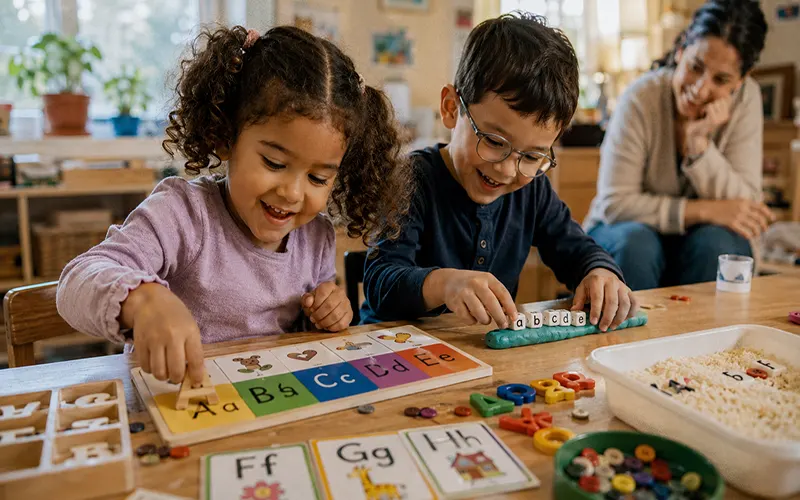
For many parents, the pressure to “prepare” a child for school often translates into a stack of boring worksheets and rote flashcard drills. However, if you talk to any early childhood development expert, they will tell you the same thing: preschoolers do not learn through passive observation; they learn through their hands, their senses, and their whole bodies.
Alphabet matching is a fundamental developmental milestone. It is the bridge between seeing a squiggle on a page and understanding that the shape holds a specific sound and identity. By turning this process into a hands-on, playful experience, you transform a chore into a core memory, building confidence rather than frustration.
The Developmental “Why”
Why do we choose matching over memorization? Because matching engages visual discrimination—the ability to notice the subtle differences between shapes (like the difference between a ‘b’ and a ‘d’).
When a child physically manipulates a letter, they aren’t just looking at it; they are internalizing its structure. Activities that involve moving, touching, or “rescuing” letters promote pattern recognition and spatial awareness. Most importantly, these activities build a positive emotional association with literacy. When learning feels like a game, the brain is more receptive to storing that information for the long term.
10 Easy-to-Set-Up Alphabet Matching Activities
I. Sensory-Based Matching
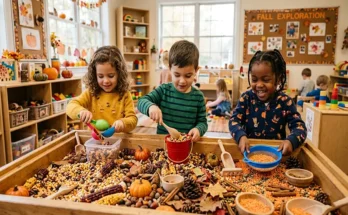
- The Rice Bin Treasure Hunt: Hide plastic magnetic letters in a bin filled with dry rice. On a piece of paper, write out the letters. As your child finds a letter in the rice, they must match it to the corresponding letter on the paper.
- Learning Goal: Develops tactile exploration and visual-letter association.
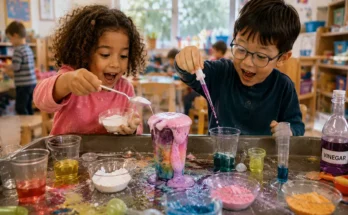
- Frozen Alphabet Rescue: Freeze plastic letters in a block of water. Give your child a spray bottle of warm water or a toy hammer to “rescue” the letters, then have them place the rescued letters onto an alphabet mat.
- Learning Goal: Builds perseverance and fine motor control.
II. Movement-Based Matching
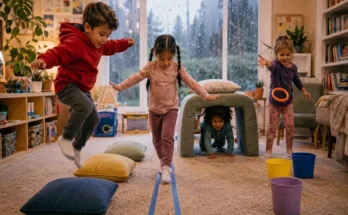
- Alphabet Hopscotch: Use painter’s tape to create a grid on the floor. Write a letter in each square. Call out a letter, and have your child hop to the matching one.
- Learning Goal: Integrates gross motor movement with rapid letter recognition.
- The “Mail Carrier” Scavenger Hunt: Write letters on index cards and tape them to different surfaces around the house. Give your child a stack of matching letters and have them “deliver the mail” by taping their cards next to the corresponding ones.
- Learning Goal: Improves body awareness and environmental letter recognition.
III. Tactile & Craft-Based Matching
- Clothespin Letter Match: Write letters on the edge of a paper plate and on the ends of clothespins. Your child must find the matching letter and clip it onto the edge of the plate.
- Learning Goal: Strengthens pincer grasp (essential for pencil control).
- Cardboard Puzzle Matching: Cut a piece of cardboard into puzzle shapes. Write an uppercase letter on one side and a lowercase letter on the other. Your child has to find which pieces “lock” together.
- Learning Goal: Reinforces upper-to-lowercase recognition.
- Sticker Path Matching: Write a path of letters on a long sheet of paper. Give your child a sheet of alphabet stickers and have them place the matching sticker over your written letter.
- Learning Goal: Enhances hand-eye coordination and concentration.
- Muffin Tin Sort: Label the bottom of each muffin cup with a letter. Place a pile of mixed letters (buttons, foam shapes) next to it, and have your child “sort” the items into the correct cups.
- Learning Goal: Teaches classification and sorting.
- Tape-It-Up Match: Write large letters on the floor using masking tape. Give your child various items (blocks, toys) and ask them to trace the shape of the letters with those items.
- Learning Goal: Encourages shape formation and spatial orientation.
- Bottle Cap Alphabet: Write letters on the inside of plastic bottle caps. Draw the alphabet on a piece of paper. Your child matches the cap to the letter on the paper.
- Learning Goal: Refines precision and focus.
Pro-Tips for Success
Every child learns at a different pace. If your preschooler loses interest, don’t force it—that is the quickest way to kill their curiosity.
- Differentiate: If the child is struggling, start with only 3–4 letters at a time rather than the full alphabet. If it’s too easy, move to lowercase letters or introduce letter sounds instead of just names.
- Model, Don’t Quiz: Instead of asking “What letter is this?” (which feels like a test), say “I’m looking for the ‘B’—I see a ‘B’ over here, do you see another one?”
- Follow Their Lead: If they want to use the clothespins for a different game, let them! The goal is to keep the positive connection to the tools.
Consistency Over Intensity
Learning the alphabet is a marathon, not a sprint. You do not need to set up elaborate stations every single day. A five-minute game while you’re folding laundry or a quick round of alphabet hopscotch before dinner is infinitely more effective than a forced 30-minute session that ends in tears.
Keep the materials simple, keep the mood light, and celebrate the small wins. When your child finally makes that “aha!” connection between the shape in their hand and the letter on the paper, you’ll know that the hands-on approach was worth every minute of setup time. Happy playing!